
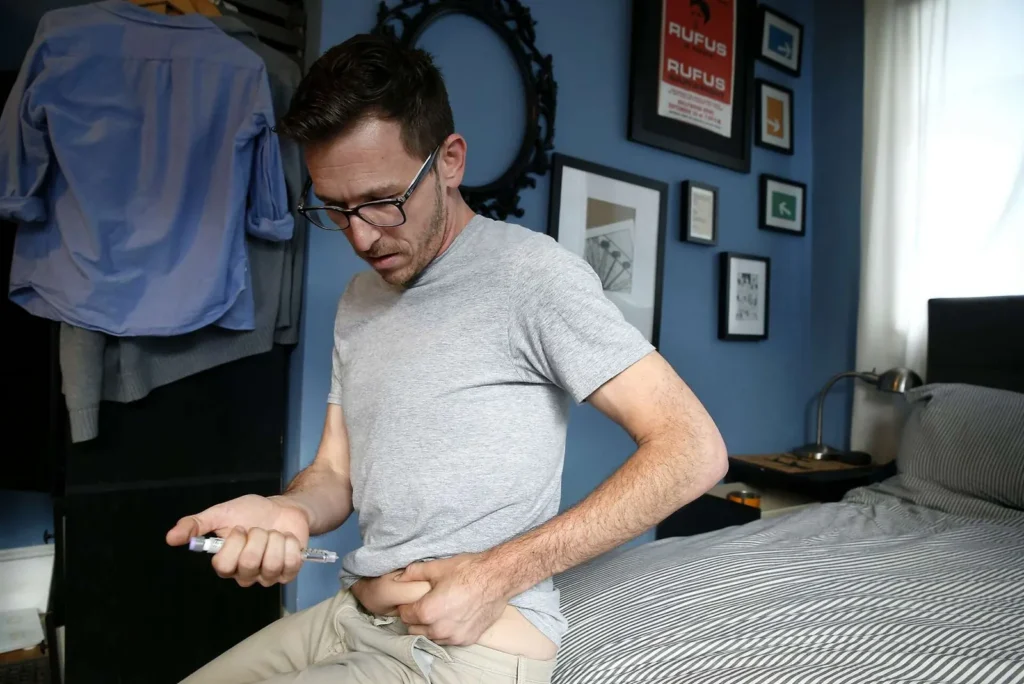
If you inject insulin every day, it is easy to fall into the habit of using the same comfortable spot. Over time, though, repeated injections in one place can cause lumpy, rubbery areas under the skin. Those lumps are more than a cosmetic issue: they can change how your insulin works.
Rotating your injection sites is one of the simplest ways to protect your skin and keep your blood sugar more predictable. This guide covers where to inject, how to build an easy rotation routine and what to do if you find lumps.
Key Takeaways
- Injecting in the same spot repeatedly can cause lipohypertrophy, fatty lumps under the skin.
- Insulin injected into lumps may be absorbed unevenly, which can lead to unexpected highs or lows.
- Rotate within one body area, spacing injections about 1 inch (a finger’s width) apart.
- Insulin absorbs at different speeds in different areas, so many people keep the same area for the same time of day.
- Check your sites regularly and ask your care team to examine them at visits.
Why Site Rotation Matters
Insulin and repeated needle sticks can cause the fat tissue under the skin to grow and thicken in one spot. This is called lipohypertrophy. It often looks like a raised bump or feels like a firm, rubbery patch. Because these areas often have fewer nerve endings, injecting there may hurt less, which is why people keep returning to them.
The problem is that insulin injected into these lumps can be absorbed more slowly or less predictably. Research has linked lipohypertrophy to higher blood sugar variability, more unexplained low blood sugar and higher insulin use. Rotating sites gives tissue time to heal and helps keep your insulin working as expected.
Where You Can Inject Insulin
Most insulin is injected into the fat layer just under the skin. The NIDDK and the American Diabetes Association describe four common areas:
- Abdomen: Anywhere on the belly at least 2 inches away from the belly button, avoiding scars and moles.
- Thighs: The front and outer areas of the upper thighs, not the inner thigh.
- Upper arms: The back or outer part of the upper arm, where there is enough fatty tissue. This site can be harder to reach on your own.
- Buttocks: The upper outer area of the buttocks.
How Absorption Differs by Site
Not every site absorbs insulin at the same speed. Your care team may use these general patterns when helping you plan, especially for mealtime insulin:
| Injection area | Typical absorption speed | Practical notes |
|---|---|---|
| Abdomen | Usually fastest | Large area, easy to see and rotate; often used for mealtime insulin |
| Upper arms | Moderate | Can be hard to reach alone; enough fat is needed |
| Thighs | Slower | Exercise involving the legs can speed absorption |
| Buttocks | Slowest | Often used for long-acting insulin and in young children |
Because of these differences, many people stay consistent: for example, using the abdomen for mealtime doses and the thighs for a bedtime long-acting dose. Rotation then happens within each area. Ask your provider what makes sense for your insulin.
A Simple Rotation Plan
You do not need a complicated chart. A clear, repeatable pattern is enough.
The quadrant method
- Divide your abdomen into four quarters around the belly button: upper left, upper right, lower left and lower right.
- Use one quarter for a week, moving each injection about 1 inch from the last one.
- Move to the next quarter the following week, going clockwise.
- You can apply the same idea to the thighs or buttocks by dividing each into halves.
The clock method
Picture a clock face around your belly button, at least 2 inches out. Inject at 12 o’clock, then 1 o’clock, then 2 o’clock and so on. Some people mark the next spot in a notebook or app so they do not lose track.
Tip: Set your pen down on the side of the body you will use next, or keep a simple note on your phone. A small visual cue makes it much easier to stick with your rotation.
How to Check for Lumps
Make a habit of checking your injection sites every few weeks. Good lighting helps.
- Look: Watch for raised areas, swelling or changes in skin color.
- Feel: Gently glide your fingertips across the skin. Lipohypertrophy often feels firm, rubbery or thicker than the surrounding skin.
- Compare: Check the same area on both sides of your body.
Lipohypertrophy is often easier to feel than to see. Ask your doctor or diabetes educator to check your sites at routine visits, too.
What to Do If You Find Lumps
If you find a lumpy area, stop injecting into it and let it heal. It can take weeks to months for the tissue to soften.
Be careful when you switch to healthy skin. Insulin may be absorbed better there, which can lower blood sugar more than you are used to. Talk to your healthcare provider before you switch, check your blood sugar more often for a while and know how to treat lows using the hypoglycemia rule of 15. Your provider may adjust your dose.
Habits That Protect Your Skin
Site rotation works best alongside good injection technique:
- Use a new needle every time. Reused needles become dull and can damage tissue. Short needles work well for most people; see our pen needle length guide.
- Avoid problem areas. Do not inject into scars, moles, bruises, stretch marks or skin that is red or irritated.
- Inject room-temperature insulin. Cold insulin can sting more.
- Review your technique. Our guide on how to use an insulin pen covers each step.
At bddiabetes.com we hear from many people who never realized a favorite spot could affect their numbers. A few minutes spent checking your sites can make your blood sugar easier to manage. You can explore more guides in our Insulin Therapy section.
Frequently Asked Questions
How far apart should injections be?
A common recommendation is about 1 inch (roughly a finger’s width) from your last injection. Your care team may give you specific guidance.
Do lumps from injections go away?
They often soften and shrink over weeks to months if you stop injecting into them. Some may not disappear completely. Ask your provider to check any lumps that do not improve.
Does site rotation matter if I use an insulin pump?
Yes. Infusion sets also need to be moved regularly, as directed by your pump’s instructions and your care team, to prevent skin problems and keep insulin absorption reliable.
Is it okay to inject in my arm?
Yes, if there is enough fatty tissue and you can inject comfortably and safely. Many people find the back of the arm hard to reach on their own, so ask your educator for tips.
This article is for educational purposes only and is not a substitute for professional medical advice. Always talk with your doctor, diabetes educator or pharmacist before changing your treatment.